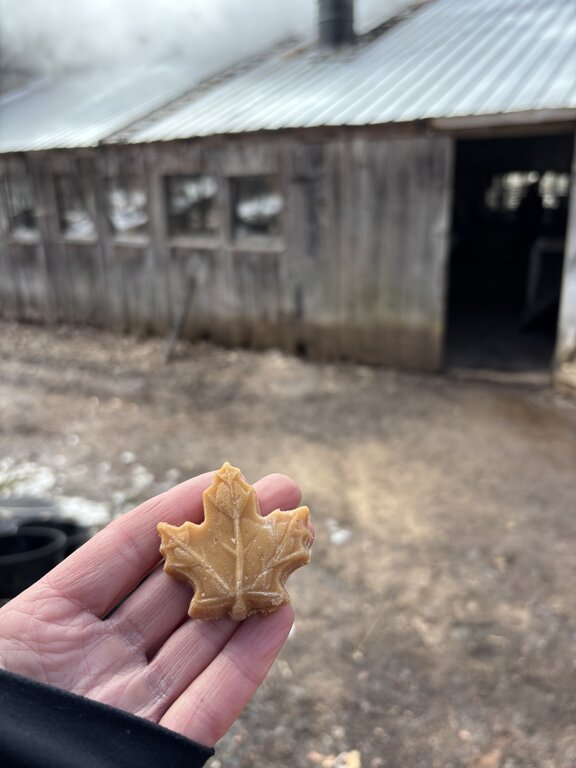
Maple Syrup in Nova Scotia: Where to Visit a Sugar Camp This Spring
Maple syrup season is one of those things that feels deeply Canadian, and if you grew up here, chances are you have a memory or two of muddy boots, steam rising off a sugar shack, and eating taffy off a paddle before it fully hardened. I grew up going to maple farms in the spring. We even tried tapping the maple trees at our cottage once, but it did not go so well.
When we moved to Nova Scotia, I assumed maple syrup was more of an Ontario and Quebec thing. I was wrong. Nova Scotia has over a hundred maple producers, and the province takes its maple seriously, in fact Cumberland County alone accounts for about 70% of the province’s maple taps. There’s a whole trail of sugar camps you can visit near Amherst, a legendary farm restaurant in the Cobequid Hills, and small-batch operations tucked into the Valley and the Northumberland Shore that most visitors never find.
This is my guide to the best maple syrup farms in Nova Scotia worth visiting, from full sit-down brunch experiences and farms where you can watch the sap boiling in action, to a few hidden gems and the best spots to pick up something good to bring home.
The Best Maple Syrup Farms in Nova Scotia to Visit
From full farm restaurant experiences to small sugar camps where you can watch the sap boiling and leave with a bag full of maple cream, here’s where to go.
Sugar Moon Farm
📍Earltown, Northumberland Shore
When people ask about maple syrup farms in Nova Scotia, Sugar Moon Farm is almost always the first name that comes up. This working maple farm in the Cobequid Hills near Earltown has been producing syrup since 1996, and it’s grown into something really special: part sugar camp, part farm restaurant, part hiking destination, all in one stop.
Open year round, the restaurant is a cozy log building serving maple-inspired brunch all day, built around local ingredients and of course, serving their own syrup. The Red Fife buttermilk pancakes are the thing to order, but the full menu is worth reading.
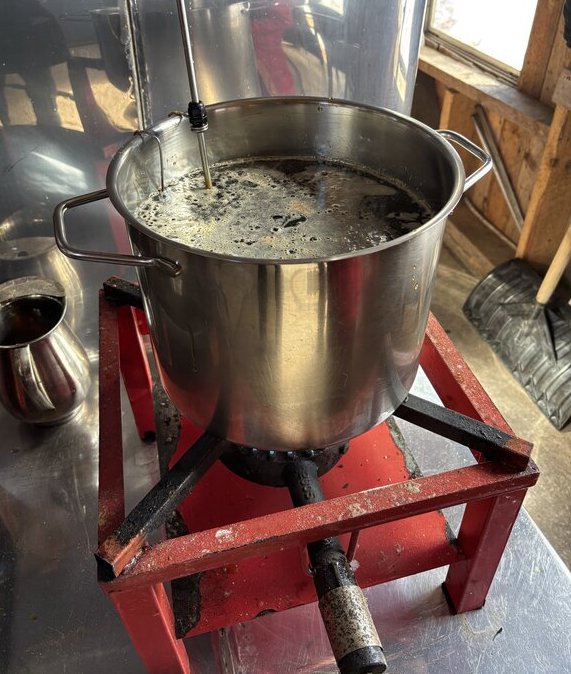
Beyond the food, Sugar Moon also offers farm tours where you’ll learn how maple syrup is actually made, from the tapping and sap collection to the wood-fired evaporator and the boiling process that turns 40 litres of sap into one litre of syrup. The tour ends with a maple tasting, which is one of the best parts of the experience.
After, you can visit the shop, which is well stocked with their own products to take home
Sugar Moon is open Saturdays and Sundays year-round, but spring is peak season and it gets busy. Reservations are strongly recommended, especially for the restaurant and tours.
TKE Tip: If you’re up for a hike, the Rogart Mountain Trail leaves right from the farm and takes you through the sugar woods that makes a good addition to your visit. Note that the trail closes for a few weeks in spring while conditions dry out, so check ahead if that’s part of your plan.
Maple Sugar Lane
📍 Maple Sugar Lane, Cumberland County
If you want to see maple syrup being made, the sugar camps near Amherst are the place to go. Cumberland County is actually the maple syrup capital of Nova Scotia home to about 70% of the province’s maple taps — and the three camps along Maple Sugar Lane welcome visitors during the season, no reservation required. You can walk in, watch the sap boiling, buy products straight from the source, and leave with bags full of things you didn’t know you needed.
We visited all three in one afternoon, Ripley’s, Thompson’s, and Donkin’s, and it made for one of the best spring outings we’ve had since moving to Nova Scotia.
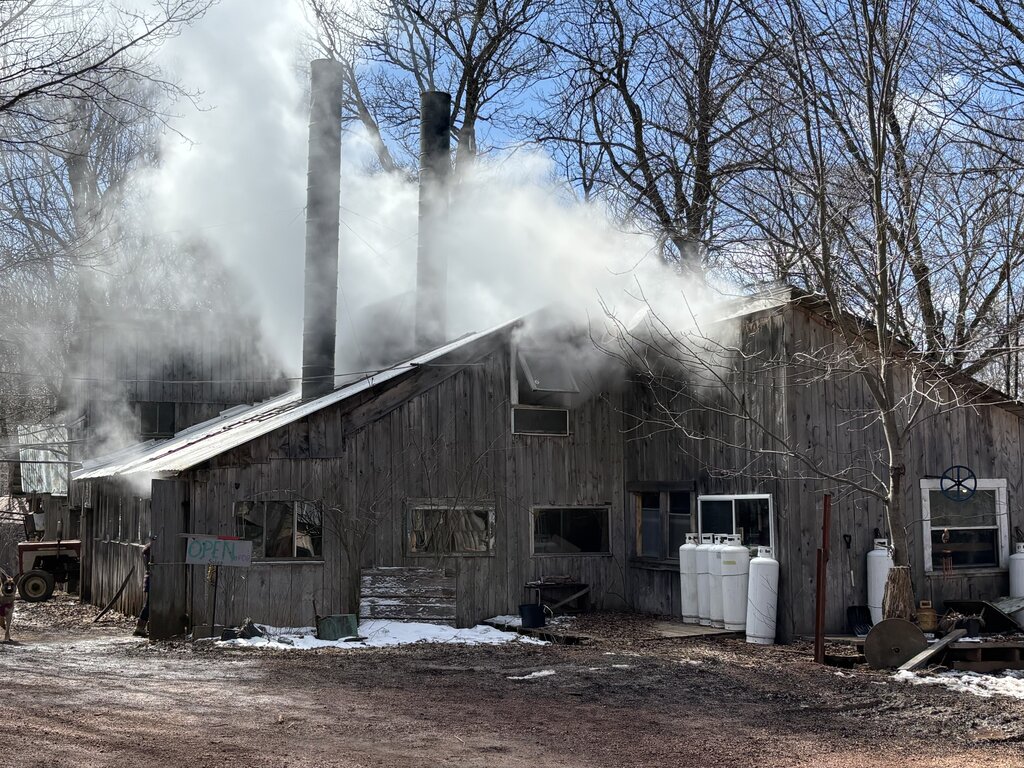
Ripley’s Sugar Woods was our first stop and our favourite. It’s about a 15-minute walk in from the parking lot along a gravel, snow-covered path (at least when we were there), and when you arrive you can smell the maple before you see the evaporator.
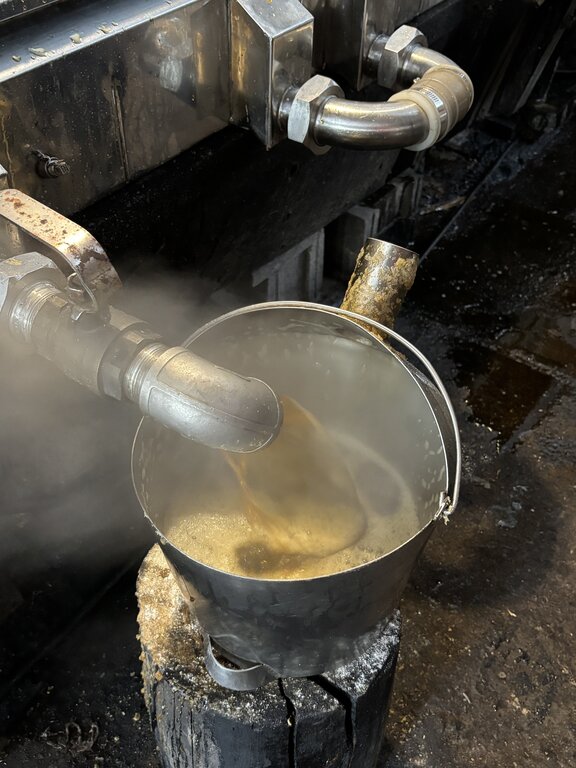
One of the owners was happy to stop and walk us through the process, and we got to watch him open the tap to fill a fresh bucket of maple syrup.
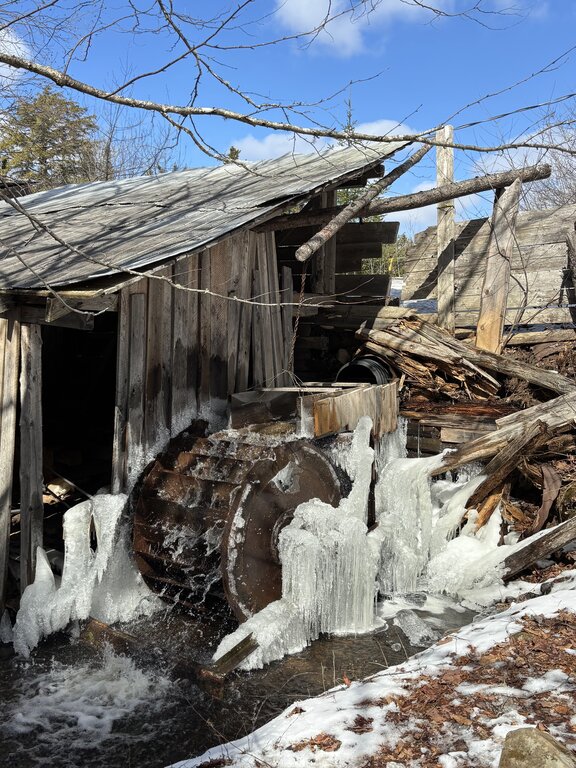
You can also head out back to see the water wheel that used to power the maple syrup production (now it’s run on solar), and get a closer look at the lines that bring the syrup into the shack.
Products are sold right there on-site — we picked up maple taffy and maple cream leaves and barely made it back to the car before they were gone.
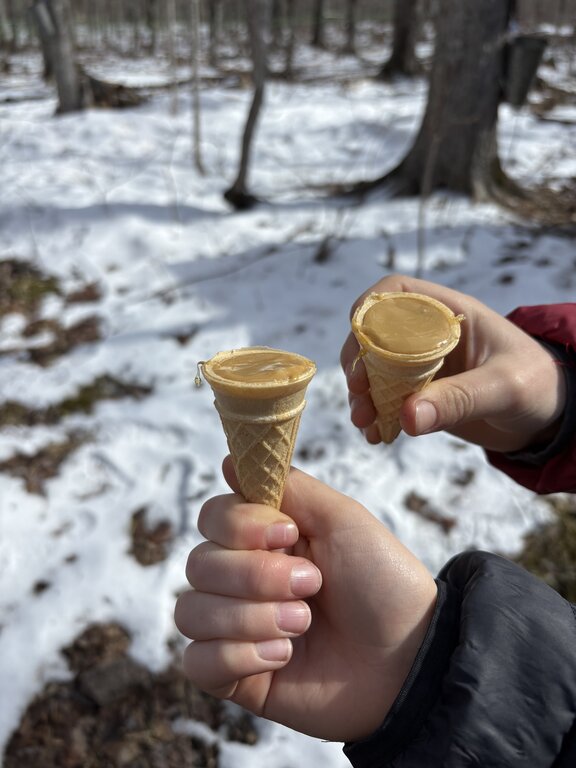
Thompson’s Maplebud Sugar Woods is a smaller setup, and a steel evaporator means you can’t see much of the boiling process, but there’s a window at the front selling their products. Don’t leave without trying the maple cone — a small cone with maple taffy on the bottom and maple cream on top. It sounds simple, but it’s completely delicious, and honestly a bigger hit with my kids than the taffy on its own.
Donkin’s Sugar Camp is the smallest of the three. We didn’t find there was as much to see, but a few treats to grab and a friendly stop to round out the afternoon. They do maple taffy on snow, but that’s by group booking only, so be sure to call ahead if that’s what you’re after.
All three farms are cash only, and hours during maple season are generally daily during maple syrup season, but call ahead or check their Facebook pages before you go, since everything depends on the sap flow and the weather.
Saturno Maple Farms
📍 Avondale, West Hants
Saturno Maple Farms is about as small-batch as it gets — a two-acre sugar bush with around 75 trees, and a genuinely personal maple experience that’s hard to find at a larger farm.
The hour-long tour walks you through the full process, from tapping the trees to the finished product. It’s hands-on and unhurried, and every kid goes home with a maple colouring book and a lollipop. They also sell seasonal preserves and honey products alongside the maple syrup, so leave room in your bag.
Swan’s Maple Products
📍 Central New Annan, Tatamagouche area
Swan’s is one of those places that doesn’t get nearly enough attention. We had a visit planned this spring but a power outage in the area affected their maple syrup production and the timing didn’t work out. It’s still firmly on the list for next year.
From everything I’ve read, it’s worth the effort. It’s a family-run operation set in a beautiful maple forest near Tatamagouche. You hike through the forest while the sap is being turned into syrup, and on a clear day you can see Prince Edward Island from the top of the mountain. Reviews are consistently excellent.
If you make it before I do, I’d love to hear what you think.
Ross Farm Museum
📍 New Ross, South Shore
Ross Farm Museum is a working 19th century farm museum, and for two weekends in late March it adds a maple syrup event to the calendar. It’s a different experience from the other farms on this list — less about buying products and more about understanding the history and process behind maple syrup making in Nova Scotia.
During the event, visitors can sample maple syrup and pancakes, watch sap being boiled over an open fire, and learn about how it was made long before steel evaporators and tubing lines. If you’re visiting with kids who are into hands-on history, it’s a good one.
Other Places to Find Nova Scotia Maple Syrup
If you’re not up for a full farm visit, or want to stay closer to the city, you can still pick up some good Nova Scotia maple products and support local.
Acadian Maple Products
📍 Upper Tantallon, Halifax area
Acadian Maple is Nova Scotia’s largest processor of maple syrup, and their retail shop on Peggy’s Cove Road is a good stop if you’re heading out toward Peggy’s Cove. Staff are happy to talk you through the history and process, and there are on-site videos and demonstrations if you want a bit of context alongside your shopping. The product range is extensive, including maple butter, maple jams, maple BBQ sauce, infused syrups, even maple coffee, and of course the syrup itself. It’s a great option for picking up gifts without making a dedicated maple farm day of it.
Hutchinson’s Maple Syrup
📍 Annapolis Valley
Hutchinson’s has become one of the most recognized maple syrup producers in the Valley, and you’ll find their products in Sobeys and Superstore across the province. If you’re in the Valley and want to buy direct, they have a drive-through on-site and also carry infused maple syrup products worth trying.
Tips for Visiting a Maple Syrup Farm in Nova Scotia
Timing is everything. Maple season in Nova Scotia runs roughly mid-March to mid-April, but exact dates shift every year depending on the weather. Check farm Facebook pages close to your visit — they’re the most reliable source for whether the sap is running and the farm is open.
Bring cash. Most sugar camps are cash only.
Dress for the season. It’s mud season. Wear boots you don’t mind getting dirty, and accept that your car probably won’t stay clean either.
Weekends are busiest. Most farms are only open on weekends, so expect company — especially at Sugar Moon, where reservations are strongly recommended.
Check before you go. Hours depend on sap flow and weather, not a fixed schedule. What’s true one weekend may not be true the next.
Bring the kids. Every farm on this list is family-friendly, and maple season is one of those experiences that sticks with them.
What to Buy at a Nova Scotia Maple Syrup Farm
Most farms have a small shop or window on-site. Here’s what to look for:
- Maple taffy: warm syrup poured over snow and rolled onto a stick. Eat it on the spot, it doesn’t travel well.
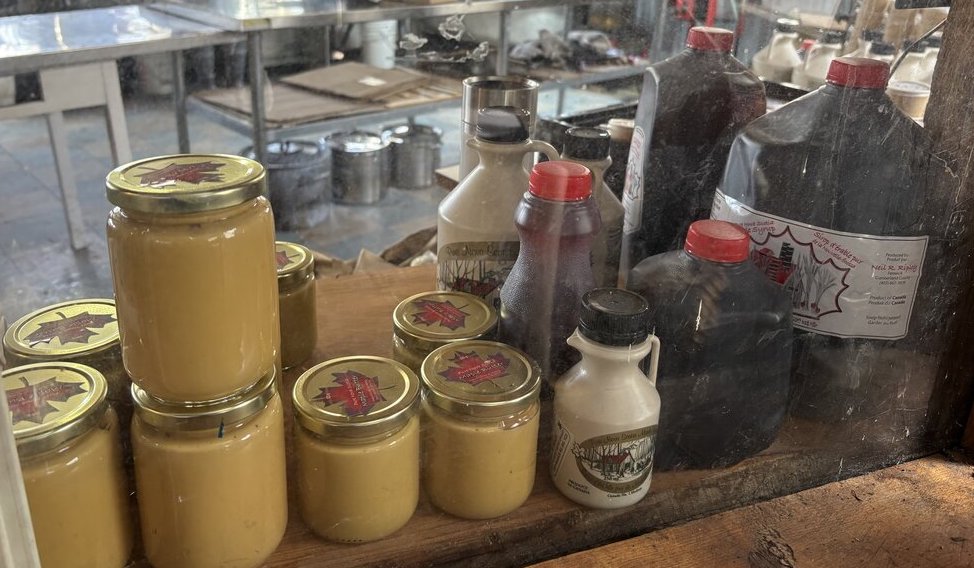
- Maple cream: a smooth, spreadable cream made from pure maple syrup. If you haven’t tried it before, it’s exactly what it sounds like and better than you’d expect. Incredible on toast.
- Maple candies: softer than you might expect, somewhere between maple cream and hard candy. Often shaped into leaves or other forms. Good for snacking and even better as gifts.
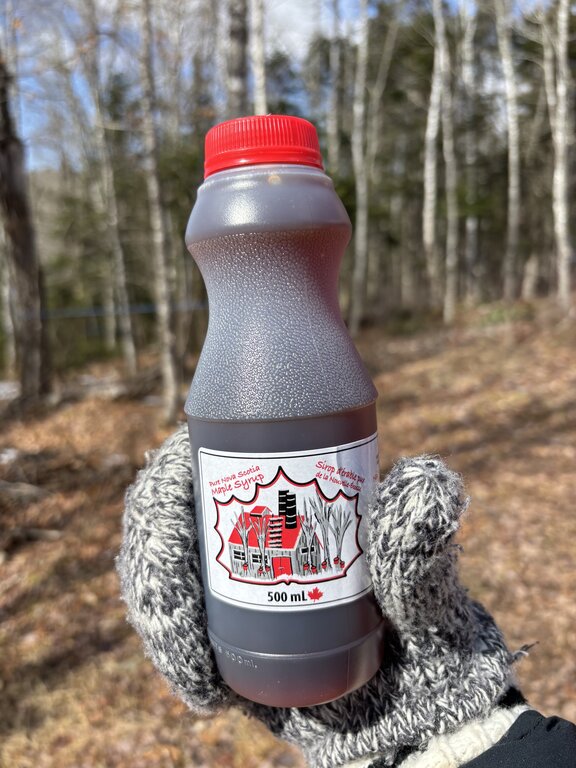
- Maple syrup: the obvious one, but worth buying direct. It’s as local as it gets and usually cheaper than grocery store prices.
- Maple butter: not actually butter, but whipped maple syrup with a spreadable consistency. A favourite to bring home.
- Other finds: depending on the farm, you might also come across infused syrups, maple jams, maple BBQ sauce, and maple chocolates.
Maple syrup in Nova Scotia isn’t something most visitors put on their radar, and that’s exactly why it’s worth seeking out. We didn’t grow up thinking of this province as maple country, but we do now. It’s become one of our favourite spring traditions, and one of those experiences that feels very Nova Scotia once you’ve done it.
Whether you’re road-tripping through Cumberland County, spending a weekend near Amherst, or just looking for something a little different to do in March, a maple farm visit is worth building into your plans. Bring cash, wear boots you don’t mind ruining, and buy more maple cream than you think you need. You’ll thank yourself later.
More Inspiration for Your Nova Scotia Bucket List
The Prettiest Small Towns in Nova Scotia
25 Unique Things to Do in Nova Scotia (Beyond Peggy’s Cove)
10 Best Gardens in Nova Scotia to Visit This Year